Hair Oil as a Modern Haircare Essential: A Practical, Evidence-Based Guide
Apr 14,2026 | Blairsom
Healthy hair is not just about styling—it reflects the condition of the scalp, the integrity of the hair fibre, and how well both are protected from daily stressors. Hair oiling, a practice used for centuries across cultures, has evolved significantly with modern formulations. Today, well-designed hair oils combine traditional plant-based nourishment with scientifically validated ingredients to deliver targeted results without the heaviness historically associated with oils.
This article explains what hair oil does, why it matters, and how to use it effectively—drawing on current cosmetic science and dermatological insights.
What Does Hair Oil Actually Do?
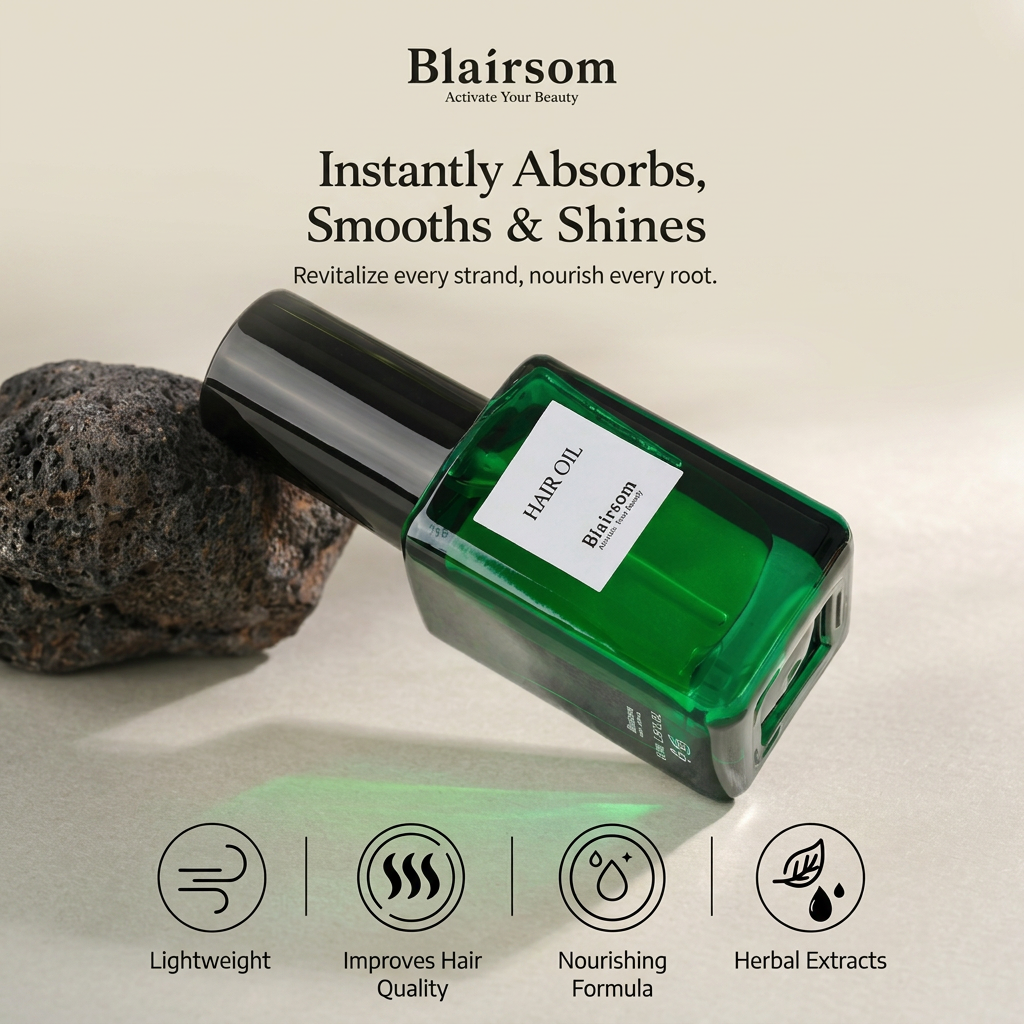
Blairsom Hair oil serves four primary functions:
![]()
1. Nourishes and Strengthens
.webp?w=1080&h=1080)
Hair oil delivers essential nutrients, fatty acids, and vitamins directly to the hair fibre. This helps reinforce the hair structure, improve elasticity, and reduce breakage caused by daily stress, styling, and environmental exposure.
2. Deep Moisture
Hair fibres naturally lose moisture due to washing, heat styling, and climate conditions. Hair oil forms a protective barrier over the cuticle, locking in hydration and preventing dryness, leaving hair softer, smoother, and more manageable.
3. Antioxidant Care
Many hair oils contain antioxidant-rich ingredients that help protect hair from external damage such as UV exposure, pollution, and oxidative stress. This protection supports overall hair health and helps maintain shine and vitality.
4. Promotes Growth
When applied to the scalp, hair oil can support a healthier environment for hair growth. By improving hydration and stimulating microcirculation, it helps nourish hair follicles and optimise conditions for stronger, healthier hair growth.
What Makes a Modern Hair Oil Effective?
Modern hair oils balance performance with cosmetic elegance:
Lightweight Silicones for Surface Protection
Ingredients such as dimethicone and cyclopentasiloxane are commonly used in professional formulations. Dimethicone acts as a barrier that smooths the cuticle and reduces moisture loss, while cyclopentasiloxane enhances spreadability and evaporates after application, leaving behind active ingredients. Studies in dermatology confirm the safety and effectiveness of silicones in improving hair feel and reducing damage.
Plant Oils for Structural Support
Oils such as macadamia and soybean oil are rich in fatty acids and vitamin E. Macadamia oil contains oleic acid and palmitoleic acid, which are similar to natural scalp lipids, making it particularly compatible with human hair. These oils help improve elasticity, reduce dryness, and support overall hair strength.
Antioxidant-Rich Oils for Environmental Protection
Certain botanical oils, such as buriti oil, are high in carotenoids and antioxidants. These compounds help neutralise oxidative stress caused by UV exposure and pollution, both of which contribute to hair degradation.
Circulation-Enhancing Extracts
Capsicum (chili) extract contains capsaicin, which has been studied for its ability to stimulate blood flow in the scalp. Improved circulation may support nutrient delivery to hair follicles, although more research is ongoing in this area.
How to Use Hair Oil Effectively
The benefits of hair oil depend not only on the formulation but also on correct application.
Pre-Wash Treatment
Applying oil to the scalp and lengths before washing can reduce protein loss and improve hydration. Leaving it on for 20–30 minutes (or overnight) allows deeper penetration and conditioning.
Leave-In Application
A small amount applied to damp hair helps smooth the cuticle, reduce frizz, and improve shine. This method is particularly effective with lightweight formulations.
Heat Protection
Oils containing silicones can reduce friction and form a protective layer when using heat styling tools, helping to minimise damage.
Overnight Treatment
Extended application allows for prolonged conditioning, especially beneficial for dry or damaged hair.
When Should Hair Oil Be Used?
Hair oil can be incorporated at multiple points in a routine:
- Before washing for deep conditioning
- After washing for styling and protection
- Before heat styling to reduce damage
- Overnight for intensive repair
Common Mistakes to Avoid
- Using excessive amounts, which can lead to build-up and heaviness
- Applying only to the surface without distributing evenly
- Neglecting the scalp when using oils intended for scalp health
- Applying to overly wet hair, which can dilute effectiveness
Conclusion
Hair oil, when formulated and used correctly, is a versatile and effective component of modern haircare. It supports moisture retention, protects against environmental and mechanical damage, and enhances overall hair appearance.
The key is choosing a formulation that balances lightweight feel with functional performance, and applying it consistently using appropriate techniques. With this approach, hair oil becomes less of an occasional treatment and more of a foundational step in maintaining healthy, resilient hair.
References
- Draelos, Z. D. (2023). Silicones in Dermatology: An Update. National Center for Biotechnology Information (NCBI). https://pmc.ncbi.nlm.nih.gov/articles/PMC10298615/
- Burnett, C. L., et al. (2016). Safety Assessment of Dimethicone and Related Compounds. Cosmetic Ingredient Review.
- Healthline. Macadamia Oil for Hair: Benefits and Uses. https://www.healthline.com/health/macadamia-oil-for-hair
- Green People. The Benefits of Buriti Oil for Skin and Hair. https://www.greenpeople.co.uk/blogs/the-beauty-hub/the-benefits-of-buriti-oil-for-skin-hair
- Inui, S., & Itami, S. (2016). Effect of Capsaicin on Hair Growth. NCBI. https://pmc.ncbi.nlm.nih.gov/articles/PMC4740347/
- Gavazzoni Dias, M. F. R. (2015). Hair Cosmetics: An Overview. International Journal of Trichology.
- Robbins, C. R. (2012). Chemical and Physical Behavior of Human Hair. Springer.
Comment